Saturday, November 16, 2024

My teeny-tiny Japanese hotel room

Now the Japanese are generally smaller built, but I was not expecting the rooms to be so small! My room is just big enough for me to wriggle into and then fall on the bed! 


The bathroom too is tiny, with a bathtub that would be small even for Dheeraj. But I enjoyed curling up in it for a relaxed hot soak. 


The toilet is a miracle of modern engineering. It has a heating system built into the toilet seat, so that it is warm when you sit on it (I kid you not!). It has small retractable nozzles that spray water and deodorizer for smells. The water temperature can be finely adjusted. 

But it does not have a bucket or mug or spray faucet! Please do not ask me any questions on how I am managing🙄

First Impressions of Nagasaki

Nagasaki: first impressions: 

A beautiful little town that somehow captures the sea- side feel of Goa with the hill- station feel of Ooty. Add on to that the autumn colours in the trees.....The 1-hr drive from the airport to Nagasaki was stunning. Excellent roads, beautiful cars, fast yet orderly traffic. We also went through a number of well- constructed tunnels, since of them almost 3km long.

Here are a few photos from my afternoon walk:


I also met a Kolkata- style tram


Ordering lunch was a challenge, since hardly anybody knows English. I had to point out what I wanted from pictures like this.....


Or from displays like this....


But I survived! Here's what I finally ate:


Another challenge was the chopsticks. I finally decided to abandon the effort completely. The unfortunate consequence was that by the end of the meal I had 2 children watching with open mouth as I ate Japanese food with fork and spoon.  I'll be back tomorrow to eat with my fingers!

From my evening walk:


Tokyo! Here I come!

Good morning from Tokyo! I have landed, completed all the immigration running around and checked in for the Nagasaki flight. The time here is 7.45am. I think I am 3.5 hrs ahead of Indian time

I thoroughly enjoyed the food on my flight.
  

I think there was Miso soup, sticky rice with a chicken steak, and some sort of fish and vegetables. Plus good old Mother Diary mango yoghurt. And lots of juice options. (I noticed the Japanese travelers were asking for and getting some sort of alcoholic beverage, but I didn't know what to ask for or try, and so stuck to various juices)

Some non- racist observations: 
Is it possible to be too polite? The Japanese air hostesses are certainly trying to find out. They come across as always apologetic, with the most sincere, heartfelt empathetic facial expressions, bowing deeply,  folding their hands in an apologetic namaste, and requesting forgiveness!


I have never been able to sleep well while sitting, (which is why I gave up overnight bus travel a long time ago) and so I hardly slept at all.

Watched the sun rise from above the clouds


Had a really cool landing. The Tokyo airport seems to be right at the sea- edge


After completing all the immigration formalities, which took a while, I had to travel from Terminal 3 to 1 in the airport shuttle

Sunrise in Terminal 3


I probably reached Terminal 1 at peak hour. There was a huge student crowd at security, with a Delhi Metro vibe to the place. But the security arrangements were super efficient, and lines moved along very quickly

Tokyo airport? Or Delhi Metro?!


Most of the students boarded a flight to Okinawa, and the airport is quiet again

Friday, November 15, 2024

Japanese Airlines counter at Delhi airport

[15/11/2024, 17:20] Checked in, and waiting now at the departure gate 

[15/11/2024, 17:21] The Japanese airlines staff stood in a line at the counter, welcomed us in Japanese, and bowed low before opening the counter


Pre-conference reading about Nagasaki and its Christian population


I found these 2 articles really fascinating, especially the story of Dr Takashi 


Here's a quote from the first article....

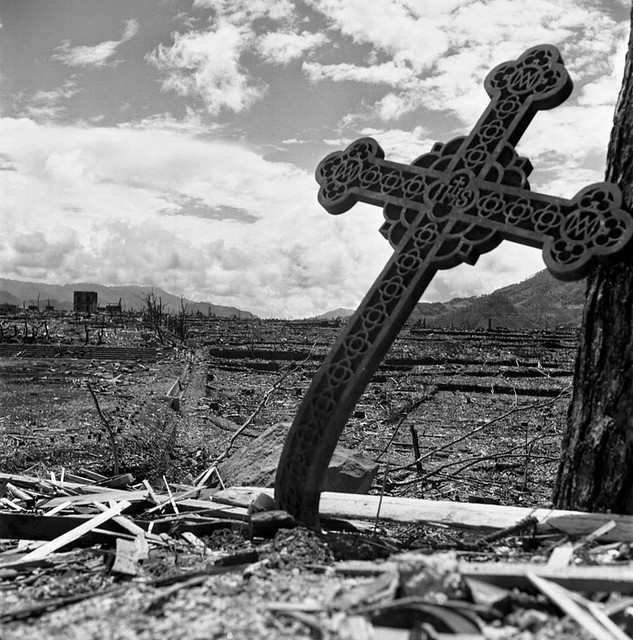
"I came across the book A Song for Nagasaki by Paul Glynn a few years ago, and it was one of the most unforgettable books I have ever read. It tells of the beauty of the Japanese culture, the story of Christianity coming to Japan, and the devotion of many who became martyrs rather than give up their faith. Nagasaki was the birthplace of Christianity in Japan, and had a thriving Christian community, the centerpiece of which was the Urakami Cathedral, Ground Zero for the bomb. But A Song for Nagasaki is really the story of Takashi Nagai, a medical doctor in Nagasaki who had become a devoted Christian after a long search for truth — disappointing his beloved father by abandoning the Shinto religion he’d been raised in. 

Nagai was at work at the hospital on the beautiful morning in August when the bomb was dropped. He survived because he happened to be in an inner room of the hospital which provided some degree of protection. Nagai was trapped and injured; he was eventually dug out of the rubble by a co-worker. He finally made it outside and into a nightmare, literally a living hell. 

I read the story of what he encountered that day with a sense of horror — the descriptions of the suffering of the people reminded me of the most ghastly descriptions of hell I’d ever imagined. To perish immediately was a great mercy. Despite his own serious injuries, the doctor immediately threw himself into doing all he could do to help the dying who were all around him — somewhere in the vicinity of one hundred thousand, half of which died that day, and half of which lingered a bit longer before succumbing to death. 

It was several days before Takashi was able to leave the ghastly scene and make it to his home. He found what remained of his beloved wife in the kitchen — a few bone fragments and her rosary beads. His two young children had been spared — they had gone on a hike to the mountains with their grandmother that day. 

The story grows even more remarkable in the months to follow, as Takashi refuses to give in to bitterness and instead forgives and becomes a great preacher of peace. He preached to the survivors of the church there and told them that the reason the bomb had fallen on Nagasaki was so that the body of Christ there could absorb the wounds, bear the sins of the world, end the cycle of violence, and not return evil for evil, but instead forgive. He became a great spiritual leader of the Christian community in Japan. 

Very soon, his radiation sickness made him an invalid forced to lie on a mat in a one-room hut that his friends constructed for him. He became famous in Japan — a prophet, a revered holy man who spent his days in prayer, writing books, and receiving the many guests who came from around the world to meet him, even Helen Keller! A popular movie was made of his life — The Bells of Nagasaki, telling the story of how he helped organize the salvage of the cathedral bell found buried in the rubble and worked quickly to get it hung so that it could ring once again on Christmas Day — a symbol of hope and endurance for the believers there. He published several books, some of which are available in English. He lived much longer than anyone expected, but finally died of the radiation sickness in 1951."


It sounds like the Christians of Nagasaki were disproportionately affected by the atom bomb. Yet this paragraph gave me goose bumps: 

"The story grows even more remarkable in the months to follow, as Takashi refuses to give in to bitterness and instead forgives and becomes a great preacher of peace. He preached to the survivors of the church there and told them that the reason the bomb had fallen on Nagasaki was so that the body of Christ there could absorb the wounds, bear the sins of the world, end the cycle of violence, and not return evil for evil, but instead forgive. He became a great spiritual leader of the Christian community in Japan."

The journey to Nagasaki begins.....

The kids were all up early this morning to send me off. I had the last of J's smash burgers for breakfast. Anand prayed for my trip and safety, and that God would take care of them while I was away. Dheeraj was sad that he could not travel with me to Japan. The Goamiles driver was on time. And I was off..... 

I had a beautiful early- morning drive to the airport, with mist in the valleys and a lovely sunrise over the Chapora river. My flight to Delhi was a little delayed, and so I had the chance to walk around Mopa airport, where I discovered this quiet workspace at the extreme end of the airport with a nice work desk and a great view. I'm sure I am going to use this desk sometime in the future. 


I then had a good flight on an ex-Air Vistara flight (post merger with Air India) and am currently in Delhi Airport, waiting for the next flight at 8pm. I think I will go and check in by 4pm itself.

The HSR Global Symposium 2024

The Gates Foundation, which funds our CHO mentoring project, contacted us a couple of months ago about the Health Systems Research Global Symposium in Nagasaki, Japan. The Foundation had been given a chance to talk about some of their health interventions in India, and wanted the CHO project to be highlighted as a part of their presentation. 


 The CMC team decided that Rajan and I would go for this symposium. I was glad for the opportunity to connect with others from India and abroad who were interested in strengthening and developing health systems. From the Gates Foundation invitation letter, I could see that the Bihar project, that I had been a part of between 2015 and 2019, was also going to be presented. I was particularly excited at the opportunity to hear about how this project had progressed over the last 5 years, and to re-connect with some of my former colleagues from CARE, Bihar. 

I was not sure, until the last few hours, that I would be able to travel, because my visa application seemed held up/ lost in Mumbai, but it finally arrived at 3pm yesterday. To my surprise, I found that I have been given a 5-yr multiple entry visa to Japan. 

My kids have been super- excited about this trip. A couple of weeks ago, Anand reminded me that I was going to miss his birthday. "I am not at all upset," he said, "on the contrary, I feel very happy that you are getting more opportunities to speak, and your career is progressing. BUT..... It will be very nice if you can get me a small Japanese sword as a present! 

No pressure, and I won't be upset if this is not possible. But try to get one, ok?" 

Turns out, this is not going to be a simple matter of walking into a shop and picking up a sword. The internet seems to warn that it may not be fully legal to own a Japanese katana in India. At the very least, I may need to declare it at customs when re-entering India and pay duty. I may also then need to register the sword under the Arms Act and so on. I have explained all this to Anand, but promised to try my best. 


Nam was so excited about this trip that she couldn't sleep last night. She sat up with me well past midnight, chatting, helping me decide what clothes to wear, and helping me pack. She was up again at 5.45am to make sure I was ready in time for my morning cab. She wants me to bring different sorts of edible seaweed from Japan. 

Dheeraj gave me a shopping list!


It reads: 
Box of sand: 4 (He has given me 4 small plastic boxes, in which he wants me to bring sand or pebbles from the site of the 1948 atom bomb!)
Chopsticks: 10 
Fans:10 (He means the Japanese fans which can be used as wall hangings)
Tea cup: 2
Bowl: 2 
Knifes: 3
Raman: 5 (Japanese noodles must taste different when sourced from Japan, isn't it?!)

As a kind concession, he has added that I can get what I can!

Dheeraj made sure to keep this shopping list in my purse, along with my credit cards, so that I do not forget. As an added precaution, he has informed me that he will be sending this list by email as well.


Talk about pressure!

Friday, May 17, 2024

The "Other-Centred" Approach

A few days ago, I came across this interesting statistic. Apparently, there is record, in the gospels, of Jesus asking 307 questions to His disciples and followers. In contrast, He is asked 183 questions, of which he gives a clear answer to only 3. Even if these numbers are not precisely accurate, they do reveal a very interesting aspect of Jesus’ servant leadership. 

It seems that the Foot-washing episode at the Last Supper was only the culmination of a three-year servant-journey with these disciples, in which Jesus seems to have consistently demonstrated a “Disciple-centred” or “Disciple-focused” approach. Instead of taking a “Leader-centred” approach and telling his disciples how to take care of him and serve him better, (as many leaders do), Jesus kept asking the question, “How can I serve you better?”. Jesus’ leadership style was focused on the needs of the team as well as on the needs of the individual disciples. 

This approach seems to have characterised his teaching and mentoring style as well. Jesus knew that he had a short time within which to prepare his motley band of disciples for life and ministry after he was gone. There were two options: The traditional “Teacher-centred” or “Mentor-centred” approach, in which he could take regular classes for them, complete the curriculum, cover all the topics, answer all their questions, and give them plenty of advice, telling them clearly what to do. This may even have been the easier approach, with clear endpoints making it easier to say, “It is finished’ when the course was completed. 

Instead, Jesus chose to take the second option, and truly demonstrated “Student-centred learning” and “Mentee-centred mentoring”. He asked more questions that he answered, forcing listeners to think, reflect and grow in the process. We often think of Mentors as “Having all the right answers”, but Jesus demonstrated that the greatest mentors are those who “Ask the right questions”. He knew that ultimately this approach would be more effective. 

Some of his questions were designed to help listeners reflect on the new things they were learning. (“If you love those who love you, what reward will you get? Are not even the tax collectors doing that?”

Some questions caused their confidence to grow. (“Look at the birds of the air; they do not sow or reap or store away in barns, and yet your heavenly Father feeds them. Are you not much more valuable than they?”

Some were designed to initiate discussion. (“Who do people say that I am? ……..But what about you? Who do you say I am?”

Some questions were powerful, rhetorical, and heart-searching. (“What good will it be for a man if he gains the whole world, yet forfeits his soul?”

His questions demonstrated that he was not going to make assumptions but was willing to listen (like asking the blind man brought to him, “What do you want me to do for you?”

Unsurprisingly, this approach seems to have been most effective. After being filled with the Holy Spirit, these disciples became tough, resilient, capable, and ready to take on the world. Acts 4:13. Now as they observed the confidence of Peter and John and understood that they were uneducated and untrained men, they were amazed, and began to recognize them as having been with Jesus. 

Let’s reflect together: What are the most effective “other-centred” strategies we need to adopt, in order to truly be “servant-leaders” who serve their teams and families well?

Sunday, July 3, 2022

Moving from Sick-care to Health-care

 (This article first appeared in The Toad, the magazine of the Students Association of CMC Vellore, published in June 2021)

Moving from Sick-care to Health-care

Pradeep Ninan

Let me begin with the story of three patients sitting in the OPD in Madhipura Christian Hospital, a mission hospital in rural Bihar.

In Room 1, we meet 50-year-old Rani (name changed) who has come for a postnatal check-up. This was her 6th pregnancy.

Pregnancy no 1 had resulted in a normal delivery at home. Girl child. Now 31 years old.

And so on. All normal deliveries at home. Resulting in three more daughters who were now 29, 27 and 25 years old respectively. She kept conceiving and delivering at home.

Until 22 years ago, when she had finally managed to give birth to a male child. Relieved and overjoyed, she had undergone a tubal ligation.

Sadly, the story did not end there. The son passed away in a road traffic accident 3 years ago.

And so, this elderly braveheart underwent hormonal treatment and fertility procedures to try and conceive again. She had finally conceived after IVF.


We watched as she came for every check-up on time, faithfully taking her pills and tetanus vaccinations, looking forward to welcome a new son, 31 years after her firstborn.

Things did not go as planned. Baby no 6, also delivered by a vaginal delivery, was A GIRL.

Pause here for a moment to think of the life ahead of this beautiful little baby, born as the fifth unwanted girl child in this family.....

➖➖➖➖➖➖➖➖➖➖


In Room 2, we meet Ramini (name changed), a 42-year-old lady, who has come for an antenatal check-up. Her obstetric score is G10 P9 L8 END1. Feeling the pressure of society to produce a male child, she has been doing her best. Unfortunately, this has resulted in 9 daughters. 8 of them are still alive, aged 16, 14, 12, 10, 8, 6, 4 and 2 years. The last daughter had died soon after birth. (Let us not speculate too hard on what might have caused this death!). Now she is pregnant again, and wants us to do a scan. We explain to her that we would not be willing to reveal the sex of the foetus. The scan shows that she is pregnant with TWINS.


➖➖➖➖➖➖➖➖➖➖

In Room 3, we meet little Rajkumari (name changed). She does not know how old she is, but looks possibly 14 or 15 years old. She is dressed in a sari, because she is already married. Her presenting complaint is…………Infertility! She has been brought for evaluation by her relatives, because she has not yet been able to conceive.


➖➖➖➖➖➖➖➖➖➖

The WHO defined Health in 1948 as “A state of complete physical, mental, and social well-being and not merely the absence of disease or infirmity.”

I like this definition, partly because it is so close to the Biblical idea of ‘Shalom’.

Cornelius Plantinga in his book Not the Way It’s supposed to be: A Breviary of Sin helps us understand what ‘Shalom’ means:

“The webbing together of God, humans and all creation in justice, fulfillment, and delight is what the Hebrew prophets call Shalom. We call it peace, but it means more than mere peace of mind or a cease fire between enemies. In the Bible, Shalom means universal flourishing, wholeness and delight- a rich state of affairs in which natural needs are satisfied, and natural gifts fully employed, a state of affairs that inspires joyful wonder as its Creator and Savior opens doors, and welcomes the creatures in whom He delights.

Shalom, in other words, is the way things ought to be.’

It is clear that the English word ‘Peace’ is an inadequate translation for the Hebrew word ‘Shalom’. Shalom is not merely ‘peace’, or the absence of conflict. Shalom is the presence of wholeness and abundant life, a truly ‘healthy’ existence, ‘a state of complete physical, mental, and social well-being’

As ‘health-care workers’, we have the opportunity to help people live ‘healthy’ lives. We need to see our role as not merely ‘sick-care’, or the alleviation of disease and suffering, but ‘health-care’: the creation of a world with ‘complete physical, mental and social well-being’. Jesus once said, “Blessed are the Shalom makers, they shall be called sons of God’. (Mt 5:9). This was a startling invitation, not merely to resolve conflicts between people, but to be co-creators, with God and each other, of a world full of Shalom, with ‘universal flourishing, wholeness and delight’. This Shalom is possible only as people come into a right relationship with God, with other human beings around them, and with the environment or world around them.

Let us zoom out from the three women in our OPD, and try to get a birds-eye view of the health situation in our country.

It seems apparent that even if these three women receive good treatment in our OPD, (and even, theoretically, if we were to help little Rajkumari conceive!!), it would be very difficult to think of them as healthy…..

Can we call their marriages healthy, when they are treated as baby-making machines, whose primary purpose seems to be to produce a male child? Do they enjoy a ‘healthy’ relationship with their husbands?

Can we call their families healthy, when girl children are not valued, killed either in the uterus or soon after birth and discriminated against throughout life?

Can we call their communities healthy when girls are not sent to school and women are treated so shabbily? Are communities healthy when Dalits are consigned to Dalit ‘tolas’ (a part of the village) far away from the non-Dalit ‘tolas’, when Dalits are not allowed to use the same well as the forward castes and Dalit women are forced to go the fields to defecate at 4am in the morning to avoid meeting others and to protect themselves from rape (which is considered routine and normal in many villages)? Are communities healthy when Dalit children are not allowed to sit in the same classroom as their non-Dalit peers, and Dalit men are killed for having the temerity to walk on non-Dalit roads?

Can we call society healthy when such gross inequities exist, between men and women, Dalit and forward caste, educated and uneducated, urban and rural, rich and poor?

Can we call our nation healthy when a Muslim man can be lynched on a train, on the ‘suspicion’ that he was carrying beef, and his body thrown from the train? Is our nation healthy when such deep divisions, biases and hatreds persist? Is India healthy when India's richest 1 per cent hold more than four-times the wealth held by the 953 million people who make up for the bottom 70 per cent of the country's population, while the total wealth of Indian billionaires is more than the full-year budget?(2017 data)

We live in a world that is desperately sick and in need of a Healer…….

It is in this context that we have the privilege to be health care workers and Shalom-creators.

Of course, we need to start with the individual, the woman patient sitting in front of us in the OPD, and give her the best and most compassionate and ethical curative care possible.

But as a community of ‘wounded healers’ (can any of us claim to be truly experiencing this life of perfect health and Shalom ourselves?!), we need to strategically think and work together for the health of families, communities, societies and nations, and create Shalom in the world around us. No single person or profession can do everything. There are many ‘non-medical’ people who are also a part of this community of ‘wounded healers’, Shalom-creators together with us. Each of us has a small, unique and vital part to play, and every contribution is invaluable. Together with ‘curative medicine’, we need to collectively develop ‘preventive medicine’ that seeks to prevent ‘un-health’ or ‘dis-ease’ from developing. But at the same time, crucially, we also need to develop ‘promotive medicine’ which is aimed at helping individuals, families, communities, societies and nations experience true Shalom….health, joy, wholeness, flourishing, and abundant life.


“Seek the Shalom of the city where I have placed you…., and pray to the LORD on its behalf,

For in its Shalom you will find your Shalom.” Jer 29:7


What a Wonderful World!